Spondylolisthesis
Slipped Vertebra, Spinal Instability, and Treatment Options
When One Spine Bone Slips Over Another
Spondylolisthesis occurs when one vertebra in the spine slips forward over the vertebra beneath it. This spinal misalignment may place pressure on nearby nerves and affect the stability of the spine.
Some people experience mild lower back discomfort, while others may develop persistent pain, stiffness, leg symptoms, or difficulty walking due to nerve compression or spinal instability.
At Mash Spine & Orthopaedics, spondylolisthesis treatment in Singapore is tailored to the patient’s symptoms, imaging findings, spinal stability, lifestyle, and functional needs. Treatment may include physiotherapy, rehabilitation, medication, spinal injections, or surgery where appropriate.

Why Spondylolisthesis Happens
The spine functions like a stack of interconnected blocks that work together to support posture, movement, and stability. When one vertebra slips out of alignment, additional stress may be placed on the surrounding joints, discs, ligaments, and nerves.
The degree of slippage may remain mild and stable in some patients, while others develop progressive instability over time.
Spondylolisthesis commonly affects the lower back and may contribute to:
- Lower back pain
- Muscle tightness
- Nerve irritation
- Difficulty standing or walking
- Changes in posture or spinal alignment
Common Types of Spondylolisthesis
Different types of spondylolisthesis may develop for different reasons.
Degenerative Spondylolisthesis
Degenerative spondylolisthesis develops gradually due to age-related wear-and-tear changes affecting the joints, discs, and ligaments of the spine.
As the supporting structures weaken over time, one vertebra may slowly slip forward over another.
This type commonly occurs in adults and may be associated with:
- Disc degeneration
- Arthritis
- Spinal stenosis
- Nerve compression
- Chronic lower back pain
Isthmic Spondylolisthesis
Isthmic spondylolisthesis occurs when a small stress fracture develops in part of the vertebra, a condition known as spondylolysis.
This is more commonly seen in:
- Athletes
- Gymnasts
- Individuals involved in repetitive spinal extension activities
Over time, repeated strain may contribute to vertebral slippage and spinal instability.
Traumatic or Post-Surgical Spondylolisthesis
Spinal instability may occasionally develop after:
- Falls or accidents
- Sports injuries
- Previous spinal procedures
- Fractures affecting spinal alignment
Congenital Spondylolisthesis
Some individuals are born with spinal structures that make slippage more likely later in life.
Congenital spinal alignment differences may affect long-term spinal stability.
What Do Grade 1 and Grade 2 Spondylolisthesis Mean?
Spondylolisthesis is often graded according to how much one vertebra has slipped forward.
Grade 1 Spondylolisthesis
Grade 1 indicates mild slippage.
Many patients with grade 1 spondylolisthesis may have:
- Mild lower back pain
- Stiffness
- Occasional leg symptoms
- Minimal spinal instability
Some patients remain stable for years with conservative treatment and monitoring.
Grade 2 Spondylolisthesis
Grade 2 indicates a greater degree of slippage.
Symptoms may become more noticeable and may include:
Symptoms may include:
- Persistent lower back pain
- Tightness in the legs
- Nerve irritation
- Tingling or numbness
- Difficulty walking or standing
Treatment recommendations depend on symptoms, instability, and nerve involvement rather than grading alone.
Symptoms That May Signal Spondylolisthesis
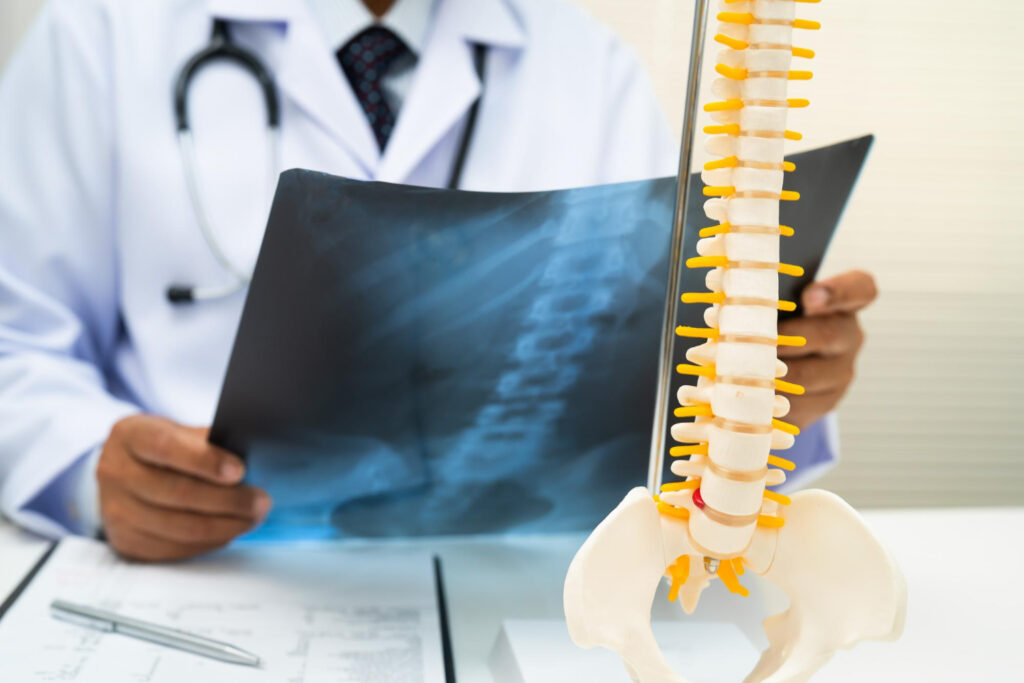
Not everyone with spondylolisthesis develops symptoms. However, when symptoms occur, they may gradually worsen over time.
Common symptoms may include:
- Lower back pain
- Stiffness or tightness in the back
- Leg pain
- Muscle tightness in the hamstrings
- Tingling or numbness
- Weakness in the legs
- Pain worsened by standing or walking
- Fatigue during activity
In more severe cases, spinal instability may affect posture or walking patterns.
What Could Be Causing Your Symptoms?
Several spine conditions may cause similar symptoms. A proper assessment helps identify whether symptoms are related to vertebral slippage, nerve compression, or other spinal problems.
| Symptom | Possible Conditions |
|---|---|
|
Lower back pain |
Spondylolisthesis, disc degeneration, muscle strain |
|
Leg pain |
Nerve compression, spinal stenosis |
|
Tingling or numbness |
Lumbar nerve irritation |
|
Difficulty walking |
Spinal instability, lumbar stenosis |
|
Tight hamstrings |
Isthmic spondylolisthesis |
|
Posture changes |
Progressive vertebral slippage |
Important Disclaimer:
This information is for general education only and should not be used to self-diagnose or self-treat. A medical assessment and imaging may be necessary to determine the exact cause of symptoms.
When Should You See a Spine Doctor?
Some mild cases remain stable with conservative management, while others gradually worsen over time.
You may wish to seek medical assessment if you experience:
- Persistent lower back pain
- Leg numbness or tingling
- Pain affecting walking or standing
- Tightness in the legs
- Weakness in the legs
- Worsening posture
- Symptoms affecting work or exercise
- Pain that persists despite conservative treatment
Early assessment may help identify spinal instability or nerve compression before symptoms progress further.
How Spondylolisthesis Is Diagnosed
Because lower back pain has many possible causes, accurate diagnosis is important.
Assessment usually begins with understanding:
- Pain location
- Movement limitations
- Walking tolerance
- Nerve-related symptoms
- Functional difficulties
A consultation may include:
- Physical examination
- Posture assessment
- Neurological testing
- Flexibility assessment
- X-rays
- MRI scans
- CT scans
Imaging may help identify:
- Degree of vertebral slippage
- Spinal stability
- Nerve compression
- Disc degeneration
- Associated spinal stenosis
Spondylolisthesis Treatment in Singapore
Treatment depends on:
- Severity of symptoms
- Degree of slippage
- Spinal stability
- Presence of nerve compression.
- Functional limitations
- Lifestyle and activity demands
Not all patients require surgery.
Physiotherapy for Spondylolisthesis
Physiotherapy may help:
- Strengthen core muscles
- Improve spinal stability
- Improve flexibility
- Reduce muscle tightness
- Support posture and movement
Exercise programmes are usually tailored according to symptoms and spinal stability.
Patients with mild or stable slippage may benefit from guided rehabilitation and strengthening programmes.
Lifestyle and Activity Modifications
Simple adjustments may help reduce stress on the lower back and improve spinal support.
Recommendations may include:
- Avoiding repetitive heavy lifting
- Improving posture
- Core strengthening
- Safe lifting techniques
- Weight management
- Regular stretching
- Low-impact exercise
Activity modification may help reduce symptom flare-ups.
Medication and Pain Relief
Activity modification may help reduce symptom flare-ups.
- Reduce inflammation
- Relieve muscle spasm
- Improve comfort
- Support rehabilitation
Treatment recommendations depend on symptoms and medical history.
Spinal Injections
Image-guided spinal injections may sometimes be considered for:
- Nerve-related pain
- Persistent inflammation
- Lumbar nerve compression
- Diagnostic clarification
Not all patients require injections.
Spinal Fusion Surgery
Surgery may sometimes be considered when:
- Slippage progresses
- Spinal instability worsens
- Nerve compression becomes severe
- Walking becomes difficult
- Pain significantly affects quality of life
- Conservative treatment is unsuccessful
Spinal fusion surgery aims to stabilise the affected spinal segment and reduce abnormal movement.
Living with Spondylolisthesis
Some people live comfortably with mild vertebral slippage, while others may develop progressive symptoms over time.
Helpful measures may include:
- Staying physically active
- Core strengthening
- Physiotherapy
- Flexibility exercises
- Posture awareness
- Regular follow-up assessments
Persistent symptoms should still be medically assessed, especially if nerve-related symptoms worsen.
Why Patients Seek a Spine Specialist for Spondylolisthesis in Singapore
Patients may seek consultation for:
- Slipped vertebra symptoms
- Degenerative spondylolisthesis
- Isthmic spondylolisthesis
- Lower back pain
- Nerve compression
- Lumbar instability
- Grade 1 or grade 2 spondylolisthesis
- Difficulty walking
- Failed conservative treatment
- Second opinions regarding spinal fusion surgery
Mash Spine & Orthopaedics is a spine clinic in Singapore providing assessment and treatment for spondylolisthesis and other spinal instability conditions at Farrer Park Medical Centre.
Treatment plans are tailored according to symptoms, imaging findings, spinal stability, activity levels, and recovery goals.
Frequently Asked Questions About Spondylolisthesis
What is spondylolisthesis?
Spondylolisthesis occurs when one vertebra slips forward over the vertebra beneath it.
What causes a slipped vertebra?
Common causes include degeneration, stress fractures, congenital spinal differences, trauma, or post-surgical instability.
What is the difference between grade 1 and grade 2 spondylolisthesis?
Grade 1 involves mild vertebral slippage, while grade 2 indicates a greater degree of slippage.
What is isthmic spondylolisthesis?
Isthmic spondylolisthesis develops when a stress fracture weakens part of the vertebra, allowing it to slip forward.
Does every patient with spondylolisthesis need surgery?
No. Many patients improve with physiotherapy, rehabilitation, activity modification, or injections.
What is spinal fusion surgery?
Spinal fusion surgery stabilises the affected spinal segment and helps reduce abnormal movement caused by spinal instability.

Book a Consultation at Mash Spine & Orthopaedics
If you are experiencing persistent lower back pain, leg symptoms, spinal instability, or concerns related to a slipped vertebra, schedule a consultation with Dr Mohd Mashfiqul Arafin Siddiqui at Mash Spine & Orthopaedics in Singapore.
As a spine specialist and spine doctor in Singapore, Dr Mash provides assessment and treatment for spondylolisthesis, spinal instability, nerve compression, and other spine conditions affecting movement and daily function.
A detailed assessment at our spine clinic can help determine the severity of vertebral slippage and guide suitable treatment options, including physiotherapy, rehabilitation, spinal injections, decompression procedures, or spinal fusion surgery where appropriate.