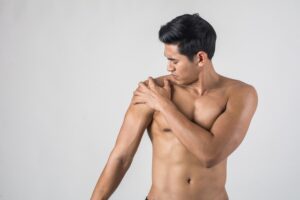
Many people notice that one shoulder seems higher than the other, their clothes do not hang evenly, or they tend to slouch when standing.
While both scoliosis and poor posture can affect the appearance of the back and shoulders, they are not the same condition. Knowing the difference is important because scoliosis involves an actual curvature of the spine, whereas poor posture is usually related to muscle imbalance, habits, or positioning.
Knowing the early signs of scoliosis can help individuals seek appropriate assessment and understand whether further evaluation may be needed.
Key Points
- Scoliosis is a sideways curvature of the spine that differs from poor posture.
- Common scoliosis symptoms include uneven shoulders, uneven hips, rib prominence, and back asymmetry.
- Poor posture may improve when a person consciously straightens their back, while scoliosis involves a structural change in spinal alignment.
- Scoliosis can occur in children, teenagers, and adults.
- A spine specialist may use physical examination and imaging studies to confirm a diagnosis.
- Early assessment can help determine whether monitoring or treatment is appropriate.
What Is Scoliosis?
Scoliosis is a condition in which the spine curves sideways, often forming an “S” or “C” shape when viewed from behind.
Although mild curves may not cause significant symptoms, larger curves can affect posture, balance, and spinal alignment.
Scoliosis may develop:
- During childhood or adolescence
- As a result of age-related degeneration in adults
- Due to certain neuromuscular conditions
- Following spinal injury or structural abnormalities
In many adolescents, the exact cause of scoliosis is unknown. This is referred to as idiopathic scoliosis.
How Is Scoliosis Different From Poor Posture?
Poor posture and scoliosis can sometimes appear similar, but there are important differences.
Poor Posture
Poor posture may occur due to:
- Prolonged sitting
- Frequent use of electronic devices
- Muscle weakness
- Habitual slouching
In many cases, posture improves when the individual consciously stands up straighter or adjusts their positioning.
Scoliosis
With scoliosis, the spinal curve remains present even when the person attempts to stand upright.
The spine itself has developed a structural curve, which may create visible asymmetry in the shoulders, ribs, waist, or hips.
This is why a medical assessment is often necessary when asymmetry persists despite efforts to improve posture.
What Are the Early Signs of Scoliosis?
Many people with mild scoliosis do not initially experience pain. Instead, the first signs are often changes in appearance.
Common scoliosis symptoms include:
- One shoulder appearing higher than the other
- Uneven hips
- A prominent shoulder blade
- An uneven waistline
- Clothing that appears to fit unevenly
- Leaning slightly to one side
- Visible spinal asymmetry
Parents sometimes notice these changes while helping their child dress, during sports activities, or when viewing photographs.
Adults may become aware of these changes when looking in the mirror or after comments from family members.
Why Does Rib Prominence Happen in Scoliosis?
One of the more noticeable signs of scoliosis is rib prominence, sometimes called a rib hump.
Because the spine rotates as it curves, the ribs may become more prominent on one side of the back.
This is often easiest to observe when a person bends forward.
A rib prominence does not necessarily indicate severe scoliosis, but it may be a sign that further evaluation is appropriate.
Can Scoliosis Cause Back Pain?
Many adolescents with scoliosis experience little or no pain.
However, adults with scoliosis may develop:
- Back pain
- Muscle fatigue
- Stiffness
- Reduced flexibility
Pain is often influenced by factors such as spinal degeneration, muscle strain, and the severity of the curve.
Because back pain has many possible causes, a spine doctor will evaluate whether scoliosis is contributing to the symptoms.
How Does a Spine Specialist Diagnose Scoliosis?
Diagnosis typically involves several steps.
Medical History
A spine specialist may ask about:
- When the asymmetry was first noticed
- Any family history of scoliosis
- Back pain or other symptoms
- Changes in posture over time
- Growth patterns in children and teenagers
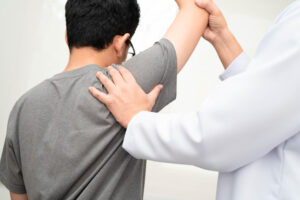
Physical Examination
During the examination, the spine specialist may assess:
- Shoulder alignment
- Hip position
- Spinal balance
- Rib prominence
- Flexibility
- Neurological function
A forward bending test is commonly performed because spinal rotation may become more visible during this movement.
Imaging Studies
If scoliosis is suspected, imaging studies may be recommended.
X-rays help determine:
- Whether scoliosis is present
- The location of the curve
- The degree of curvature
- Whether the curve is changing over time
Imaging findings help guide treatment recommendations and monitoring plans.
When Should I See a Spine Doctor for Possible Scoliosis?
Consider seeking an assessment if you notice:
- Uneven shoulders
- Uneven hips
- Rib prominence
- Persistent spinal asymmetry
- Progressive changes in posture
- Back pain associated with visible spinal curvature
Children and teenagers experiencing rapid growth may particularly benefit from evaluation because spinal curves can sometimes progress during growth spurts.
Adults who develop worsening asymmetry, back pain, or balance issues may also benefit from assessment.
Does Every Case of Scoliosis Need Treatment?
Not necessarily.
Treatment depends on several factors, including:
- Age
- Degree of curvature
- Risk of progression
- Symptoms
- Overall spinal health
Some individuals only require periodic monitoring.
Others may benefit from:
- Physiotherapy
- Specific exercises
- Bracing in selected growing children
- Surgical treatment in selected cases involving significant curvature or progression
Treatment recommendations are tailored to each individual’s condition.
Can Poor Posture Lead to Scoliosis?
Poor posture itself does not usually cause structural scoliosis.
However, poor posture may make existing spinal asymmetry more noticeable and may contribute to muscle discomfort or fatigue.
Maintaining good posture, staying physically active, and strengthening the muscles that support the spine can contribute to overall spinal health, but these measures do not necessarily prevent scoliosis from developing.
Takeaway
Uneven shoulders, rib prominence, or an uneven waistline are not always signs of poor posture. In some cases, these changes may indicate scoliosis, a condition involving a sideways curvature of the spine.
Because scoliosis and poor posture can appear similar, a proper assessment is often needed to distinguish between the two. A spine specialist can evaluate spinal alignment, assess symptoms, and determine whether imaging studies are required.
If you or your child have noticed persistent back asymmetry or changes in posture, seeking medical evaluation can help clarify the cause and determine whether any treatment or monitoring is needed.
Frequently Asked Questions
1. How do I know if I have scoliosis or just bad posture?
Poor posture often improves when you consciously straighten your back. Scoliosis involves a structural spinal curve that typically remains present even when standing upright.
2. What are the first signs of scoliosis?
Early signs may include uneven shoulders, uneven hips, rib prominence, an uneven waistline, or clothing that hangs unevenly.
3. Can adults develop scoliosis?
Yes. Adult scoliosis can develop due to age-related degeneration of the spine or progression of a previously existing spinal curve.
4. Is scoliosis always painful?
No. Many individuals, particularly adolescents, have scoliosis without significant pain. Symptoms vary depending on age and curve severity.
5. When should I see a spine specialist for scoliosis?
You may benefit from an assessment if you notice persistent spinal asymmetry, rib prominence, uneven shoulders, worsening posture, or back pain associated with visible curvature.
Not Sure If It’s Scoliosis or Just Poor Posture?
Changes in shoulder height, rib prominence, uneven hips, or persistent back asymmetry can sometimes be difficult to interpret on your own. A thorough assessment can help determine whether these changes are related to scoliosis or another spinal condition.
Dr Mohd Mashfiqul Arafin Siddiqui (Dr Mash) is an orthopaedic and spine surgeon who assesses and manages a range of spinal conditions, including scoliosis in both adolescents and adults. Evaluation may include a clinical examination and imaging studies when appropriate.
Book a consultation with Mash Spine & Orthopaedics to discuss your concerns and learn whether further evaluation may be recommended for you or your child.